


Quartz & Quartzite: The Difference, and Where Each Shines
The names sound alike, but quartz and quartzite are two very different materials. Quartz is an engineered stone, made from ground quartz crystals and resin, prized as a low-maintenance quartz kitchen top that never needs sealing. Quartzite is a true natural stone countertop, formed underground under heat and pressure, prized for granite-level toughness with marble-like movement.
We fabricate and install both, in-house, from templating to the final polished seam.
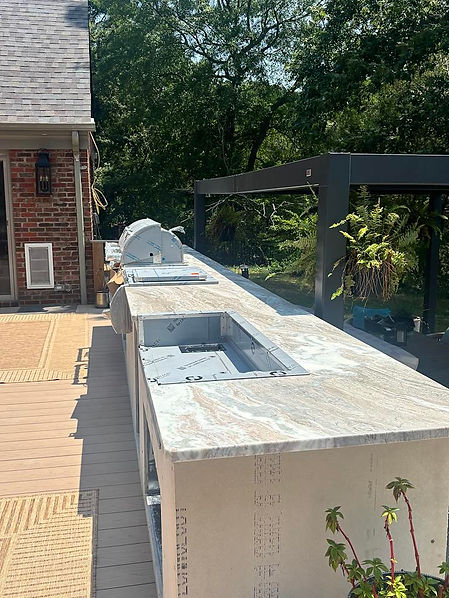
Where Quartz & Quartzite Work Best
Because one is engineered and one is natural, quartz and quartzite tend to earn their keep in different rooms.
Quartz
Everyday Kitchen Counters
Non-porous and engineered for consistency, kitchen quartz countertops shrug off spills without ever needing to be sealed, ideal for a busy family kitchen.
Quartz
Bathroom Vanities
A quartz kitchen top's low-maintenance qualities carry right over to the bathroom, resisting stains from soap, lotion, and makeup with almost no upkeep.
Quartzite
Outdoor Kitchens & Patios
As a true natural stone countertop, quartzite counter tops hold up to direct sun and temperature swings without the discoloring risk engineered quartz can face outdoors.
Quartzite
Statement Kitchen Islands
For homeowners who want the movement and depth of natural stone countertops with granite-level durability, quartzite makes a striking island centerpiece.
Making the Decision
Quartz vs. Quartzite: What's the Real Difference?
Quartz
Origin
An engineered stone, made from roughly 90% ground natural quartz crystals blended with resins and pigments, not cut from a single natural slab.
Consistency
Because it's engineered, the color and pattern you see in the showroom is exactly what arrives at your house, slab after slab.
Maintenance
Non-porous and engineered stone kitchen countertops like quartz never need sealing, just soap and water.
Best suited for
Indoor use. Extended direct sunlight can cause the resin to discolor over time, so we don't recommend it outdoors.
Quartzite
Origin
A true natural stone countertop, formed when sandstone is compressed and heated deep underground until it hardens into a material nearly as tough as granite.
Consistency
As a true natural stone countertop, veining and color vary slab to slab, closer to granite or marble than to engineered quartz.
Maintenance
Porous like granite, so quartzite counter tops need periodic sealing to resist staining, unlike quartz.
Best suited for
Both indoor and outdoor use, since it holds up to UV exposure and temperature swings without discoloring, unlike engineered granite countertops or quartz.

Still Deciding?
Compare Quartz & Quartzite to Marble and Granite
Durable & Dependable
Granite
Want marble's natural-stone character but need something tougher for a busy kitchen? Granite is built for daily wear.
Timeless & Veined
Marble
Want the most dramatic natural veining for a vanity or fireplace surround? Marble is the classic choice.